Blog

Science

A new project! Personality and migration strategies in bats

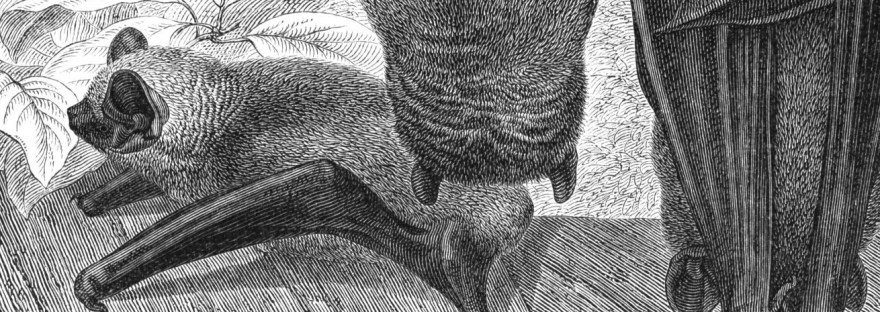
This month, I officially started with my two-year postdoc fellowship at the Leibniz Institute for Zoo and Wildlife Research (IZW), granted by the Alexander von Humboldt-Stiftung. As of now, I am part of the Evolutionary Ecology Department, or more specifically: the Batlab, and I will study the role of personality and social associations in the movement behaviour of partially migratory noctule bats, Nyctalus noctula. In Germany they are called Abendsegler, meaning something like ‘Evening sailor’. Beautiful isn’t it? I am very much looking forward to my work at IZW and I hope to learn many new things, meet many passionate wildlife researchers and contribute some fascinating new insights into noctule bat behaviour.
IZW

Abstract of my awesome bat project:

Migratory animals vitally connect distant ecosystems worldwide, impacting key ecological processes by transporting nutrients, seeds, parasites and pathogens. As the only flying mammals, bats represent a unique and widespread group of migratory animals, serving important ecosystem functions as pollinators and pest controllers. Bats comprise one fifth of all mammal species, but little is known about their migration strategies. Yet understanding animal migration strategies provides important insights into ecosystem connectivity. Therefore, I aim to gain a better understanding of the key mechanisms that drive variation in bat migration strategies.

A single bat population can contain resident as well as migrating individuals. Such populations offer an excellent opportunity to study individual differences in migration strategies within populations. Hitherto, research on migration has mostly focused on birds, yet novel tools have recently become available to study partial migration in bats. Migration poses a trade-off: migration can lead individuals to more favourable habitats, but is also risky and energetically costly. Individuals have to balance these costs and benefits of migration and are likely to differ in how they do so. Bats fundamentally differ from many migrating bird species in key life-history traits that profoundly impact migration decisions. Knowledge about bat migration strategies, may thus lead to crucial insights into the maintenance of animal migration over evolutionary timescales.

New and improved techniques, such as non-invasive isotopic geolocation, allow for novel insights into the migration strategies of this poorly understood migratory taxon. Using this novel technique in combination with bat personality assays, social network analyses and bat banding, I will test whether individual bats consistently or plastically differ in their migration strategies and investigate the key social, physiological and behavioural factors underlying these differences.
 

Science

Fieldwork is not (just) about data collection

This weekend I came back from a three-week fieldtrip to Trinidad. We went there to collect behavioural data for our guppy research project. However, on the plane back I had some time to reflect on the past weeks and realized that fieldwork is about so much more than just collecting data points.

For me, I realized, fieldwork is about all the little big things that come along with it. For example, living closely with people who all contribute in their own unique ways: someone who plays the guitar in the evening, who bakes tasty tortillas for dinner, who makes funny jokes at the end of a hard working day or who takes the team on expeditions in search of remarkable birds, snakes, insects and spiders.

Its about the surprising new people you meet, which can result in eating ‘Guinness icecream’ and making Chinese dumplings while on a tropical island.

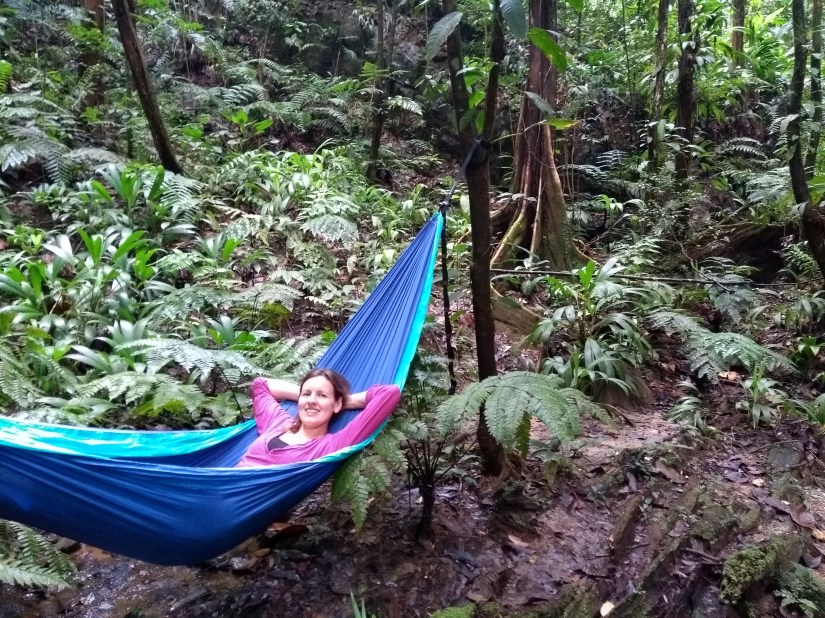
Its about seeing your entire fieldsite get flooded in about an hour and having to ‘survival’ your way out of the rainforest. And lying in a hammock shortly after.

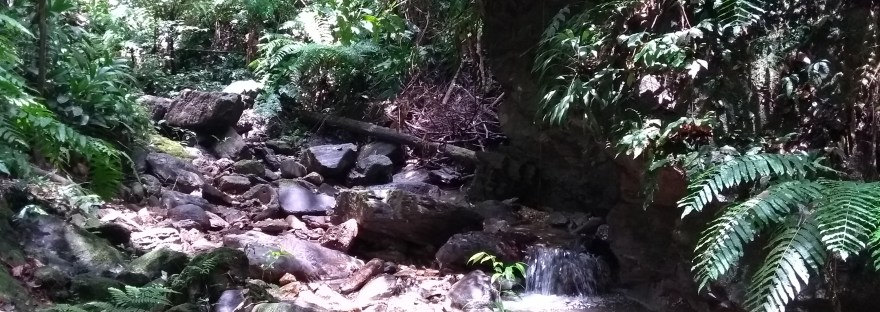
Its about seeing all the other critters that occupy your fieldsite: the little greedy crab, the colourful jumpy lynx spider, the small vocal male frog (sometimes with tadpoles on its back), but also the forever annoying killifish and the hundreds of biting insects.

Its about getting to know a little patch of nature very well, but never completely. Its about learning about your study species by observing it in between the actual trials. Its about getting new exciting ideas for next year’s fieldtrip.

Its about all these things and so much more. So the next time you see the datapoints of a fieldstudy, remember that they are not just units of analysis, they are stories, experiences, insights and surprises as well. For me, each one is a reminder of why I love being a biologist.

IMG_20180320_151151330
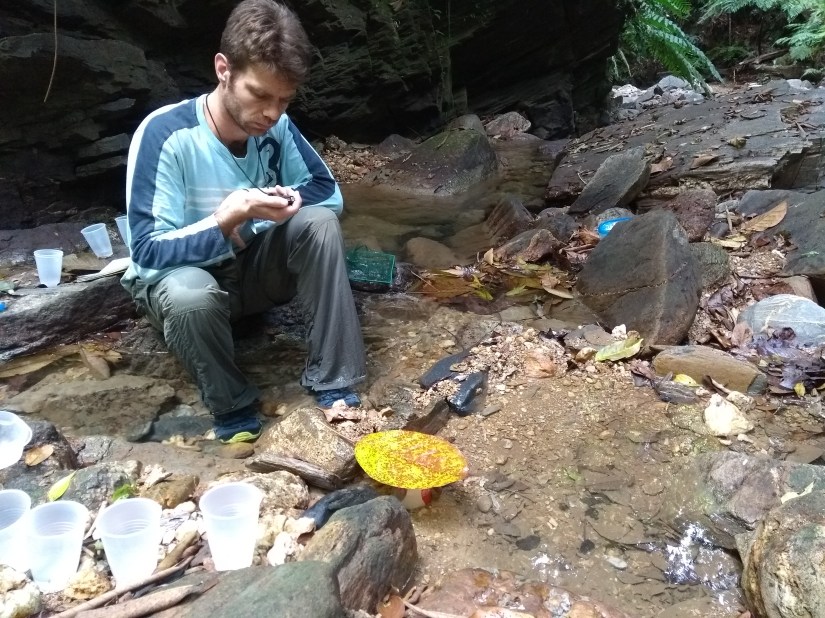
Ralf is doing some ‘in-situ’ behavioural tests
IMG_20180306_121215647
On a birding expedition
IMG_20180303_121007771
This is our fieldsite before the flooding
IMG_20180305_125431054_BURST000_COVER_TOP
This is our fieldsite during the flooding
IMG_20180307_123813524
This is me after the flooding. Unfortunately the only moment I actually had time to enjoy the hammock 🙂


Science

New preprint: Guppies on a preprint server

This week I submitted a manuscript to a preprint server for the first time. This is a bit scary because a preprint is not peer-reviewed and so is missing a ‘security check’, something that always makes me feel a bit more at ease when communicating my results [but see: http://thebrainissocool.com/2017/12/19/peer-review-is-not-all-that-is-cracked-up-to-be/%5D. However, I think preprint servers are a great idea, because you don’t have to wait for months before you can finally share your results and show people what you are working on. More importantly, preprint servers provide a way, for those interested, to read your findings without having to pass a pay-wall. A version of your study will thus always stay open-access. So, I put my fears (somewhat) aside and decided to submit my recent manuscript to BioRxiv, before submitting it to a scientific journal.

In the manuscript, we describe a field experiment with wild guppies in Trinidad by which we studied foraging success in the wild. We tested if foraging success in the wild differs consistently between individuals and if these differences can be explained by individual traits such as sex and social type, but also by population traits such as sex-ratio. I think the results are very exciting and also somewhat unexpected. If you would like to find out more, then please read the preprint on BioRxiv.

Guppies_BW_Snijders


Conservation, Science

Conservation behaviour

How can a behavioural ecologist contribute to conservation? It is a question I often ask myself. Therefore I am very happy to have become part of a team of behavioural ecologists that asks the same question. Together we followed a workshop by Mistra EviEM on how to conduct a systematic map or review and are now answering questions about the effectiveness of conservation interventions. In our case, behavioural interventions.

It is not an easy challenge, to gather and review all the literature that is out there on a given intervention, academic and grey. But, without a good overview of the best evidence available, how are we going to stop ourselves from doing the same thing over and over again? Are certain interventions effective, also on the long-term, or not at all? Are there certain conditions to be met for them to be of use?

I set out to answer these questions for an intervention in a very urgent and increasingly bigger conservation challenge: Human-Wildlife-Conflict (HWC). More specifically, I will map and review studies on the effectiveness of conditioning-interventions in reducing HWC with vertebrate carnivores. In other words Can carnivores be taught to stay away?

It will be a long, challenging, but useful task and I am very keen to work on it!